
The Power of Unexpected Ads: Lessons from the Movie Focus
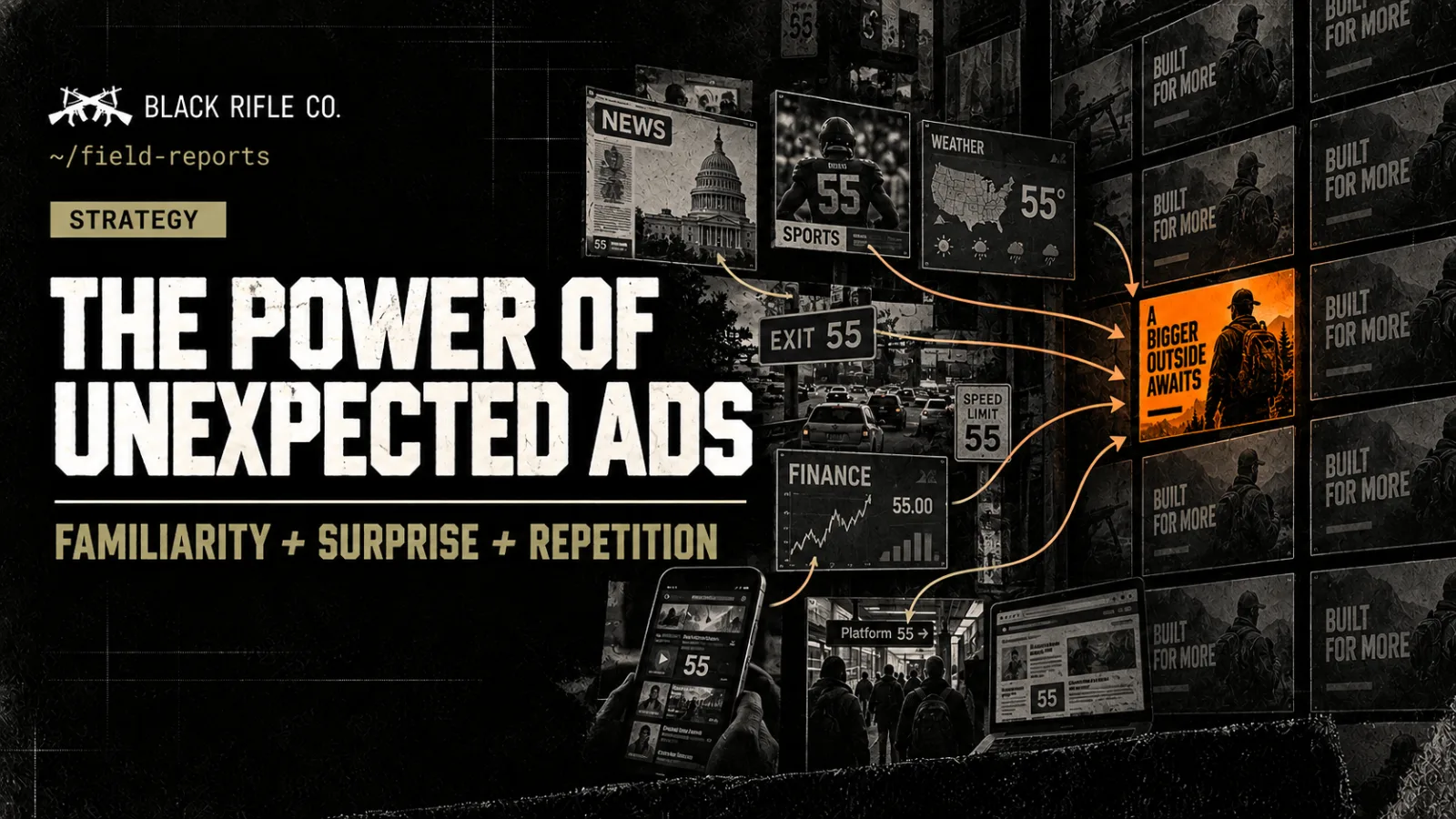
There is a scene in Focus, the 2015 con movie, where Will Smith's character wins an absurd bet at the Super Bowl. He lets a compulsive gambler played by BD Wong pick any player on the field, then stakes millions on guessing the number. Wong scans the sideline through binoculars and freely chooses jersey 55. Except nothing about that choice was free. Smith's crew had spent the entire day salting the man's route to the stadium with 55s: signs, lobbies, room numbers, a jersey walked past at exactly the right moment. He never consciously registered a single one. He absorbed all of them.
Great scene. Also a movie, and we will get to how much of it holds up. But peel the Hollywood off and one durable idea remains: the impressions that move a person are the ones he never braced for.
The trick has a track record
Derren Brown, the British mentalist, ran a version of this on camera in the early 2000s. He gave two senior advertising creatives a brief, an office, and a deadline: invent a campaign for a chain of taxidermy shops. When they presented, he opened a sealed envelope containing almost exactly their concept, down to the bear and the harp. The route their taxi took to the studio had been dressed, corner by corner, with every element they would later believe they invented.
Then there is the version that is not a stunt at all, just patience. In 1900 a French tire company started publishing a restaurant guide to give people reasons to drive. A century later, Michelin is the most feared word in fine dining, and every chef chasing a star is doing unpaid brand work for a rubber manufacturer. Guinness did the same thing in 1955: a brewery published a book of records to settle pub arguments, and the book outgrew the beer. Neither company was priming anyone. They were simply, relentlessly present where nobody expected them, and the presence compounded.
The boring psychology is the strong psychology
Three mechanisms carry the weight here, and none of them require a con artist.
Mere exposure. Robert Zajonc showed in 1968 that repeated exposure to a stimulus increases liking for it, even when people cannot recall the exposures. It has been replicated across languages, faces, shapes, and brand names for fifty years. It is about as close to settled as this field gets.
Processing fluency. Things we have seen before are easier for the brain to process, and we misread that ease as trust. A brand encountered in five different contexts feels established. The buyer cannot tell you why. He does not need to.
The von Restorff effect. Hedwig von Restorff documented in 1933 that the item which does not match its surroundings is the item that gets remembered. A firearms ad on a firearms review site matches its surroundings perfectly. That is the problem with it.
The honest footnote
House rule: measured, not modeled, and that applies to psychology too. The flashy end of the priming literature had a rough decade. Several famous studies, including the one where words about old age supposedly made students walk slower, failed to replicate. Derren Brown is a showman working with editing rooms, and the Focus scene is fiction written by people who wanted it to work. If your media plan depends on secretly steering a specific man to a specific number, you do not have a media plan, you have a screenplay.
Here is the thing: the argument does not need the spooky version. Mere exposure is robust. Distinctiveness is robust. Familiarity plus surprise plus repetition is enough, and it shows up where it should show up, in measured recall and measured lift, not in vibes.
The echo chamber is billing you for wallpaper
Now apply this to a category Meta and Google will not touch. Because the big platforms refuse firearms money, most gun brands retreat into endemic media: the forums, the review sites, the industry publications. Safe, obvious, and saturated. The reader of a gun forum has seen every gun ad a thousand times. His banner blindness in that context is total, trained by years of exposure to the same twenty advertisers rotating through the same slots. In endemic media you are wallpaper, priced as if you were a billboard.
The same buyer spends most of his day elsewhere: news sites, sports, weather, finance. On a mainstream news page, a firearms brand is the isolate, the 55 on the street corner, the one thing on the page that does not match its surroundings. Von Restorff says he remembers it. Zajonc says the third and fifth quiet encounters make the brand feel like one he already knows. And the open web can put it there at scale; among 18 million active firearms shoppers, the overwhelming majority of daily attention happens outside gun media. That contrast is a large part of how a 6x return gets measured on incremental lift, not modeled from wishful math. And to be plain, since this category demands it: none of this involves knowing who any individual is. The targeting runs on anonymized behavioral signals in aggregate.
The short version, for anyone advertising a restricted product
Firearms, supplements, CBD: if the big platforms ban you, the temptation is to huddle in your own category's media. Resist it.
- Stop buying only endemic placements. That inventory is where your competitors are and your buyer's defenses are.
- Follow the audience into mainstream news, sports, and lifestyle contexts. He is there eight hours a day.
- Cap frequency in any one context and spread the impressions across many. Five contexts once beats one context five times.
- Be the only brand in your category in the room. Surprise is most of what an impression buys, and you cannot be surprising next to three rivals.
- Measure recall and incremental lift, not clicks. Nobody clicks their way into familiarity.
The gambler in Focus lost because every 55 looked like scenery. Your next customer is walking past scenery all day. Decide whether your brand is in it.